

Why Some Dogs Ignore Commands Even When They Know Them
PUPPY TRAINING
Robert Ellington
6/8/20263 min read


Most dog owners have experienced this at least once.
Your dog knows the command.
They've done it before.
They've done it many times.
Yet suddenly, they act like they've never heard it.
You call them.
Nothing.
You ask them to sit.
Nothing.
You repeat yourself.
Still nothing.
At first, it feels frustrating.
After all, if they know the command, why aren't they listening?
Many owners assume the answer is stubbornness.
But in many cases, the real issue is something much simpler.
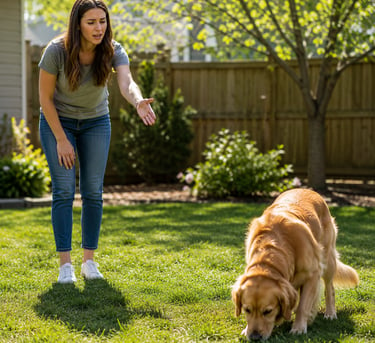
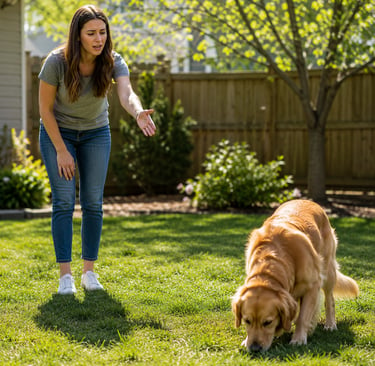
The dog is paying attention to something else.
This is one of the most common training problems dogs experience.
A dog that listens perfectly inside the house may suddenly struggle outside.
Not because they forgot.
Not because they are trying to be difficult.
But because the environment is competing for their attention.
Interesting smells.
Moving people.
Other dogs.
Birds.
Squirrels.
The world becomes much more exciting than the person giving the command.
And when attention disappears, obedience often disappears with it.
That is why many trainers believe focus comes before commands.
A dog that is fully engaged with its owner often learns faster and responds more consistently.
A dog that is distracted may struggle even when they already know exactly what you are asking.
The longer this pattern continues, the more normal it becomes.
Dogs learn from repetition.
If ignoring commands happens often enough, that behavior starts becoming part of the routine.
That is why many owners find it easier to address attention problems early rather than waiting for them to improve on their own.
Many training problems start long before the command is given.
Another common mistake is repeating commands over and over.
"Sit."
"Sit."
"Sit."
Most owners do it without realizing it.
The problem is that dogs learn patterns quickly.
If a dog hears the same command three or four times before responding, they may start believing the first command is optional.
Over time, communication becomes less clear.
The owner becomes frustrated.
The dog becomes confused.
Training feels harder than it should.
This is one reason many professional trainers focus heavily on engagement and communication.
When a dog is paying attention, fewer words are often needed.
Commands become clearer.
Rewards become more meaningful.
And training starts feeling smoother for both sides.
Many owners are surprised to discover that improving focus often helps improve multiple behaviors at the same time.
Listening.
Recall.
Leash walking.
Impulse control.
Even everyday calmness.
This is one reason many dog owners become interested in programs like K9 Training Institute.
Rather than relying only on repeated commands, the training focuses on attention, body language, calm behavior, and building stronger communication between dogs and their owners.
The goal is not simply teaching commands.
The goal is helping dogs become more focused, more responsive, and easier to guide in real-life situations where distractions are everywhere.
And because unwanted behaviors often become stronger with repetition, many owners prefer to start working on these foundations sooner rather than later.
If your dog already knows commands but struggles to listen when distractions appear, learning how focus-based training works may be worth exploring.




About
HeartPaws shares practical dog training tips, behavior advice, brain games, and enrichment ideas to help dogs live happier, more balanced lives.
Contact
info@heartbeatfit.com
© 2026 HeartPaws. All Rights Reserved.