
The Small Leash Habits That Make Walks Harder Over Time
DOG BEHAVIOR
Robert Ellington
6/19/20263 min read
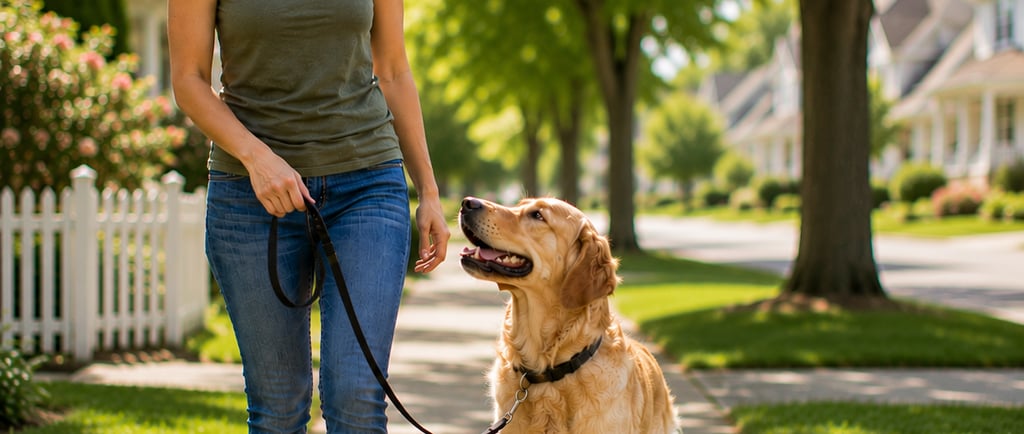

Walking your dog is supposed to be one of the best parts of the day.
A chance to get outside.
Clear your head.
Spend time together.
Yet for many dog owners, it slowly becomes one of the most frustrating parts of owning a dog.
Not because the dog is aggressive.
Not because the dog is badly behaved.
But because every walk starts feeling like a tug-of-war.
At first, the pulling doesn't seem like a big deal.
Your dog is excited.
Curious.
Ready to explore.
Most owners simply accept it as part of having a dog.
But over time, something interesting starts happening.
The dog learns that pulling works.
Pulling gets them closer to the smell.
Closer to the tree.
Closer to the squirrel.
Closer to whatever caught their attention.
And every successful repetition strengthens the habit a little more.
That is why leash problems often seem to get worse gradually rather than appearing overnight.
The dog practices pulling.
The owner practices following.
The pattern repeats.
Day after day.
Walk after walk.
Eventually it starts feeling normal.
And that's exactly what makes it harder to change.
Many leash problems become harder to fix simply because they are repeated every day.
One thing many owners never realize is that leash pulling is often connected to attention.
Most people focus on the leash.
Experienced trainers often focus on focus.
Because a dog that is fully engaged with its environment is rarely paying much attention to the person holding the leash.
And when attention disappears, communication often disappears too.
That is why many professional trainers work on engagement before worrying about perfect leash manners.
The goal is not forcing the dog to stay beside you.
The goal is helping the dog want to pay attention to you in the first place.
Many owners are surprised by how much easier walks become when attention starts improving.
The leash relaxes.
The pulling decreases.
Communication becomes clearer.
And both sides start enjoying the walk again.
The longer pulling becomes part of every walk, the more normal that behavior feels to the dog.
That is why waiting rarely solves the problem.
Habits tend to strengthen through repetition.
Not disappear because of it.
This is one reason many dog owners explore K9 Training Institute.
The program focuses heavily on attention, engagement, calm behavior, and communication before expecting reliable behavior in distracting environments.
For many owners, the biggest breakthrough isn't teaching a new command.
It's helping their dog become more focused and more connected during everyday situations like walks.
Because when attention improves, many leash problems often become easier to address as well.
And what starts as a little pulling today can eventually affect the entire walking experience if the habit continues long enough.
That is why many owners choose to work on these foundations before the behavior becomes even more established.
If every walk feels a little harder than it should, it may be worth looking at the habits being reinforced each time you pick up the leash.



About
HeartPaws shares practical dog training tips, behavior advice, brain games, and enrichment ideas to help dogs live happier, more balanced lives.
Contact
info@heartbeatfit.com
© 2026 HeartPaws. All Rights Reserved.